Friday, May 24, 2013

Cheerleader

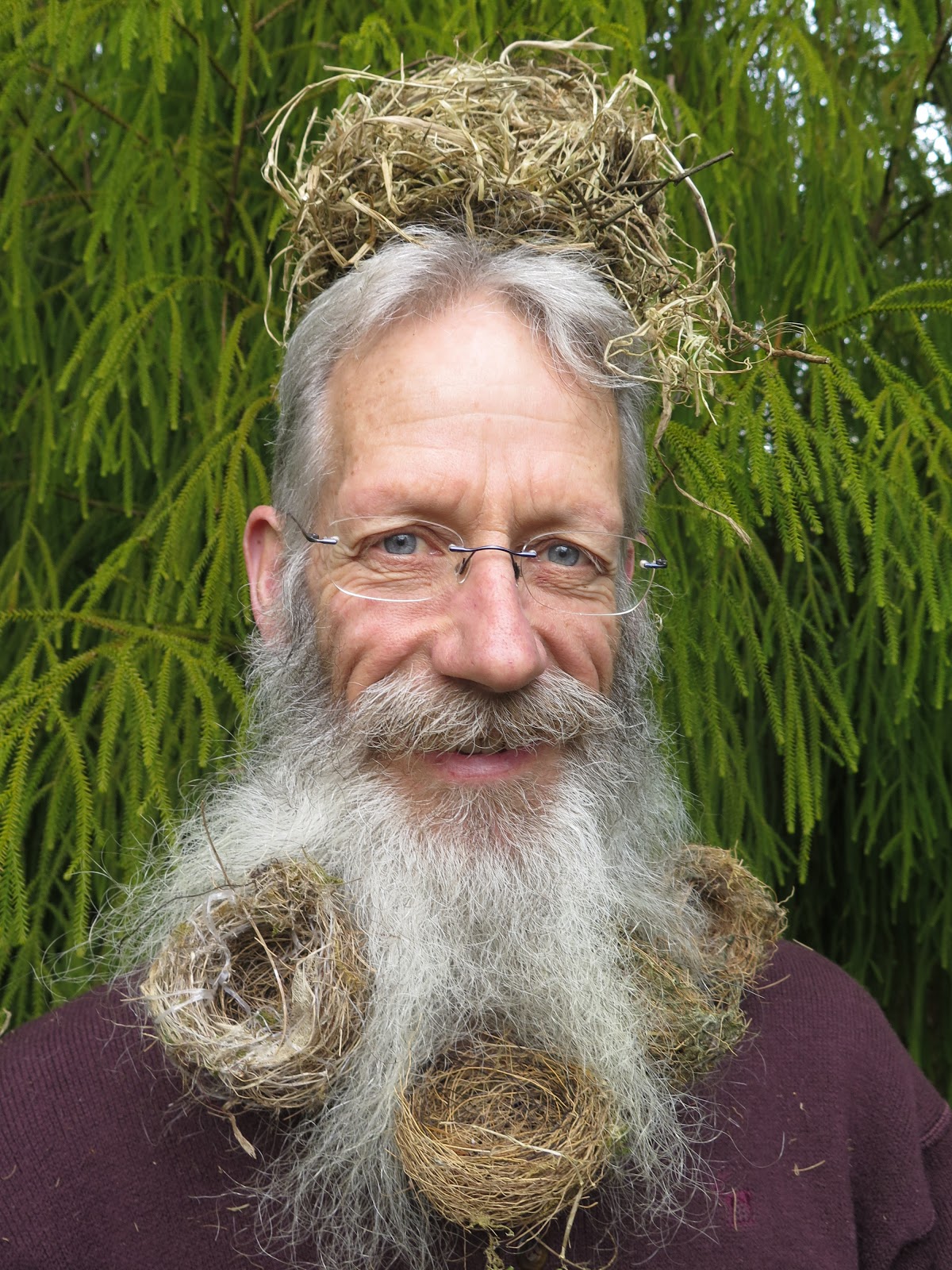
What sort of person applauds the destruction of the Denniston Plateau in order to dig up coal?

This sort.

Thursday, May 23, 2013

Attack on the RMA

At last night's public meeting called to discuss National's changes to the RMA, a very interesting point was made by Green MP Eugenie Sage around paper roads. It seemed to me that one of the proposed changes will 'solve', to the great gain of the farming community, the issue of public access across farmland through the use of these paper roads. Farmer/politicians have been beavering away in the background for some time now, trying to find a way to prevent the public from exercising their right to walk on these roads and it's here in the proposed changes to the Act that I see them accomplishing their aim. Perhaps. We will see. If that is one of the back-stories to these attacks on the RMA, the public, as usual, stands to lose.

Auckland to Bluff yacht race - minding what we say

Chairwoman Timms is being accused today, of attempting to influence ratepayer opinion in the framing of the issue when calling for public submissions on the issue. The organiser of the proposed yacht race says the chairwoman has couched the question to ratepayers in such a way as to dissuade them from supporting the race, or words to that effect. He's got a very good point. I asked the same question in the ES boardroom when it was presented to the council.
Of greater interest to me, was the last paragraph of the Southland Times report, where Olivia Taylor-Peebles writes,
"Ms Timms said she would not be voting in favour of the grant."

Surely that's a clear instance of pre-determination which would require the ES chairwoman to absent herself from the debate over the A2B yacht race, and the vote on any aspect of the council's involvement with it as well?

Just saying.

#rubyoncue

*Update - Ms Timms is saying she was misquoted and is demanding a retraction from The Southland Times. Some may wonder, looking back at some of her previous claims to the media (Hi, I'm Ruby) about the veracity of this latest claim.

Wednesday, May 22, 2013

Fig leaf


Advertising the heritage orchard


It'll be the first of its kind anywhere in New Zealand and bound to attract national attention, at least that's what I'm expecting, based on the high levels of interest that have been show for the heritage apple project to date. 
Our latest venture into apple orcharding is one that will especially excite the romantics, of which I'm one; a neighbourhood orchard in Riverton with fruit trees gathered from the local area and planted on a half-acre of ground bought for the purpose and already attracting neighbourly interest and pledges of support. 
The as-yet unplanted paddock sits behind houses that run alongside of the Riverton/Longwood highway and enjoys full sun all day, deep loamy soils and a view of the estuary. Perhaps we should have built a home on it, such is the quality of the outlook, but that vista will be enjoyed by scores of people, we believe, as they sit amongst the apple trees, picnicking or listening to music, both important aspect of any good, old-fashioned orchard. 
We have people lining up to help even at this early stage, with the planting of the trees, already 2 years old and ready to take up their permanent places for posterity, and everything else that goes with maintaining a neighbourhood orchard. 
We'll be showing anyone who doesn't yet know, how to prune and under-plant, thin apples and check for bugs; the orchard will be both a place of learning and of leisure. 
We've booked musicians (un-plugged and sympathetic) for the first-ever gig and expect a good crowd. If you would like to be involved, keep an eye on the South Coast Environment Centre website www.sces.org.nz for news and updates and feel free always, to join us as we develop and enjoy the country's first neighbourhood heritage orchard. 

Tuesday, May 21, 2013

If you like heritage apples...

...this programme will apeel to you.
 John Bunker is a Maine USA nurseryman and the founder of Fedco Seeds Trees. He is trying to save rare heirloom apple varieties and over the last 30 years, he estimates he's saved more than 80 varieties.


Monday, May 20, 2013

Evening estuary


Naming National


Danylmc @ The Dim-Post posts this challenge to creative political observers:

The Labour government under Helen Clark was nicknamed ‘Helengrad’ on the grounds that it was an authoritarian power-mad tyranny, typified by the times Clark signed a painting that she didn’t paint, and drove really fast in a car somewhere, crimes that might sound trivial now but consumed the National Party for years and still get mentioned dozens of times a week in the Kiwiblog comments.

There’s no amusing name to describe National’s authoritarian streak, but it seems a lot more pronounced than Labour’s under Clark. Andrew Geddis details the latest incident: legislation passed under urgency discriminating against the family caregivers of severely disabled people, containing an ‘ouster clause’ which prevents those discriminated against from challenging the law in court.

Throw that on top of recent developments: legislation banning protest against deep-sea drilling, the 35 year compensation clause for Sky City Casino, scrapping the undertaking to reform MMP and a bill granting massive expansion of powers to the GCSB to spy on New Zealanders, along with all the previous outrages: retrospective legalisation of the police’s illegal spying, the unconstitutional powers granted to Gerry Brownlee after the Christchurch earthquake, the constant abuse of urgency, the suspension of democracy in Christchurch (feel free to add more examples in the comments) and this might be the most authoritarian anti-democratic government in modern New Zealand history.

But, like I said, there’s no funny name to describe this pattern of behavior so in political messaging terms it doesn’t exist. If anyone has any pithy suggestions, throw them in the comments section.


If you've got a pithy one-liner that captures the patriarchal, sugar-daddy statism that National represents, head on over and stake your claim. Apparently 'Nazis' is out of bounds but that's only them saying that :-)

Sunday, May 19, 2013

Sunday questions

Is John Key's accusation that Labour and the Greens are the 'Devil-Beast' just a continuation of the obscene throat-slitting gesture he directed toward Phil Goff in the House and what do those two things say about our Prime Minister?
His 'you're dead' action and 'you're evil' claim cast Key as either very nasty or perhaps un-hinged in my view.
I wonder what everyone/anyone else thinks about this?

E.T.'s cousin's hand


It was lying on the sand, looking all forlorn.

Sunday fishing

We went to Tihaka to fish for blue cod.

Heading for the rocks, discussing how to cook the fish

It was wavey. Snaggy too.

  
There were bites, but no haul-ashores.

Claire Browning - the damage National does

(It's sure to be bad form, re-posting an entire article but I'm going to assume that Claire won't object, so important is her message) 

Kicking the tyres from beneath New Zealand

Government's gathering pace, in a way that ought to give us all serious pause - because it rips apart more than our constitutional fabric.
“New Zealand is a remorselessly democratic country.” -- Geoffrey Palmer
In 1977, 341,159 New Zealanders joined the petition of Gwenny Davis to Parliament.
Known as the Maruia Declaration, it said among its clauses that native forests needed legal protection; that the wholesale burning of indigenous forests and wildlife had no place in a civilised country; and that "our remaining publicly owned native forests should be placed in the hands of an organisation with a clear and undivided responsibility to protect them".
It was not accepted by the government of the day (Muldoon).
But it seeded the establishment of the Department of Conservation 10 years later, along with the Environment Ministry, and Conservation and Environment Acts, followed by Resource Management and Crown Minerals laws passed in 1991.
Last night and this morning, under urgency, Parliament pushed two Bills, among others, through all of their stages to completion.
“One great rush of non-stop, orgiastic lawmaking,” as Andrew Geddis put it - following hard on the heels of another post accusing “the National Government generally (and Justice Minister Judith Collins in particular) of manifest bad faith regarding electoral reform”.
One of the Bills was the Crown Minerals Amendment - amending another Amendment scrambled through just a month ago, a few weeks after it had been announced, without benefit of Bill of Rights advice, public submissions or select committee scrutiny.
Crown Minerals Amendment (the 2nd, done this morning) allows conditional permits for operators lacking the immediate expertise and financial ability to undertake drilling activities - leading Greenpeace to charge our Prime Minister of misleading New Zealanders, with his recent assurances that regulation would be 'world class' and would not allow 'cowboys' to operate.
It also extends the purported ban on, and criminalisation of, anti-oil protest from the waters of our EEZ to the high seas above the continental shelf, in what may be a breach of international law.
It does so in disregard of peer-reviewed legal advice, joined and backed by a coalition of 43,000 New Zealanders with more joining every few minutes as I write, including Forest & Bird - and Rt Hon Sir Geoffrey Palmer, New Zealander of the Year Dame Anne Salmond, founder of the Peace Squadron George Armstrong, Peter Williams QC, and many more - many of whom were involved in anti-nuclear protesting, at sea, in the 1980s.
In the other Bill, the subject of Andrew’s post ("I think National just broke our constitution"):
the judiciary's primary function - to declare the meaning of law and its application in particular cases - has been nullified. Furthermore, the judiciary's role as protector of individual citizens in terms of ensuring that they are being treated in accordance with the laws of the land has been removed. While the stakes may be small in the immediate case, this is about as big a deal as it gets in terms of our constitution.
Even the Attorney-General - unmoved, not to mention rather spiteful, on the matter of Crown Minerals - said that this was in breach of our Bill of Rights.
Taken on their own, each of these shows some gall.
Taken together with what follows, it’s indicative of a government economically desperate - also, drunk on power and growing in aggression and confidence. A government reckless as to convention and consequences, kicking the tyres right out from beneath New Zealand.
It is an open assault on our values - the 'remorselessly democratic' character of our people, our few (and fairly casual) checks and balances on abuse of executive power - the things that protect everything if you think about it - the democracy, integrity and unspoiled place that are our New Zealand story.
In the light of last night's effort, examples which seemed bad enough no more than a few months ago pale into insignificance. But what they show is a habit - a habit of kicking the tyres, then doing it a little bit harder.
Canterbury. Extension of ECan powers for a further three years, along with the bungled exercise of Canterbury Earthquake Recovery emergency powers was described by Sir Geoffrey Palmer as leaving “a toxic taste in the constitutional mouth”:
These developments remind me of the excesses of the now repealed National Development Act 1979, the legal leitmotif of the expensive and futile "Think Big" policies of that day. Do not worry about accountability, do not worry about public participation, just get on and do it because the government knows best.
RMA and local government. In the Resource Management Reform Bill 2012, government will give itself powers to ignore and override the RMA by regulation - in what is known as a 'Henry VIII clause'.
In hearings on that, and the Auckland Unitary Plan (where a government-appointed body will have the effect of limiting appeal rights), "the Government has shown utter contempt to submitters at a Select Committee in Auckland this week when many were given just a handful of minutes to address the committee," according to New Zealand First's Andrew Williams.
On February 28, Resource Management Act reform proposals were announced, which would profoundly change that Act, Ministerial powers, and people's rights.
These are powers that would let Ministers step in to rewrite local plans, or order that a resource consent must go ahead without public submissions - in response to developers lobbying, perhaps, or just the latest jobs or infrastructure pet project. It leaves even the EMA concerned. The Act’s most important sections, which govern all decision-making and outcomes under it, would be rewritten, omitting parts, and weakening others.
Submissions closed one month later, on April 2. The Prime Minister says it will be in force - in force, not drafted or introduced - by the end of the year.
Not merely the rushed nature of the process, but the poverty of advice - and downright misleading nature of some of the advice, including crucial claims on which the proposals hinged - has led Forest & Bird to lay a complaint with the SSC [pdf].
Earlier, Porirua mayor Nick Leggett had written here on Pundit on the Key-led government's assaults on local democracy:
For its part, the Beehive has shown itself willing to use selective data and extreme examples as a pretext for ideologically-driven reforms, endangering an entire tier of democratic governance in the process.
Intelligence and security. Government is about to rush through, under urgency with a shortened select committee process, sweeping new intelligence-gathering powers for the GCSB (Government Communications Security Bureau). It is a change in the brief for that organisation - conferring domestic powers, no longer confined to foreign intelligence, with a totally rewritten set of objectives - done on Prime Ministerial warrant.
DOC. On March 26, a total restructuring of DOC was announced, splitting the organisation at mid-level into conservation and 'partnership' limbs. Inside a month (12 working days' consultation, followed by a decision within a week), the decision was confirmed.
Forest & Bird Ambassador Gerry McSweeney has blogged on why that's a breach of trust with the West Coast; others including an independent inquiry commissioned by the PSA have recalled Cave Creek, which cost us 14 lives.
Reflecting back on the Maruia Declaration, it's a breach of trust with New Zealand. "The social contract between the NZ government and the West Coast was that in exchange for forest protection, central government would fund proper management of these areas for conservation and recreation," McSweeney writes.
I’m going to take a wild punt, and suggest that there is no light at the end of the tunnel yet, other than that of an oncoming train:
  • Already, Environment Minister Amy Adams has passed an EEZ law that fails to meet UNCLOS (international law of the sea) requirements. Now, she wonders whether New Zealanders should even be allowed to make submissions on deepwater oil exploration (the Deepwater Horizon, which exploded in the Gulf of Mexico in 2010, was an exploration rig). EEZ regulations coming soon will push the boundaries of what is permitted, even by the government's own weak Act.
  • One of the cornerstone Acts left untouched so far, Conservation Act changes are on their way. Through local Boards, consultation and decision-making structures set up under this and the National Parks Act involved others than Ministers and bureaucrats - ironically, they were about partnership. More recently I've heard DOC Director-General Al Morrison describe them as a sort of historical accident - an anachronism, that gets in the way. I suspect that the new structure, now being implemented, challenges Conservation Act priorities.
It's in defiance of everything - history, our story, he tangata - the people. It's a culture of derision: for quality of advice, genuine consultation, due process, checks and balances on power, for law and promises made - for 30 years of a social contract arrived at before some of us were even born, or still in short trousers - for the things that make us - for what is basic in our society (hat tip: Geddis).
I mention the Maruia Declaration,  because what is being broken to pieces here is not just 'the constitution' - an abstract thing, which we don't even have written down.
We, the people, told our Parliament what we wanted for New Zealand environmentally-speaking, and were heard. But the things that happened next are right at the top of the list of things that are, one by one, very systematically, being re-examined and taken apart - mistaken for obstacles rather than foundations.
Taken separately or together, it ought to be reason for serious pause. But far from pause, our government is gathering speed.